














A pecan leaf can tell you a surprising amount about a tree's health, age, and productivity. From the first bright green leaves of spring to the golden leaves of fall, pecan foliage plays a vital role in every harvest.
Whether you're identifying a tree in your backyard or managing a commercial pecan orchard, understanding pecan leaves helps you better appreciate one of North America's most valuable native nut trees.
What this article covers:
- What Does A Pecan Leaf Look Like?
- How To Identify A Pecan Tree By Its Leaves
- Why Pecan Leaves Are Important
- How Pecan Leaves Change Throughout The Seasons
- Common Problems That Affect Pecan Leaves
- What Healthy Pecan Leaves Should Look Like


What Does A Pecan Leaf Look Like?
A typical pecan leaf measures 12 to 20 inches long and contains anywhere from 9 to 17 leaflets. Each leaflet has a narrow, lance-shaped appearance with pointed tips and finely serrated edges.
Healthy leaves display a rich green color during the growing season. Their surface feels smooth, while the texture remains slightly leathery compared to many other hardwood trees.
Pecan leaves stand out from those of other nut-producing trees because of their length and distinctive leaflet arrangement. Walnut trees, for example, often have broader leaflets, while pecan foliage tends to appear more elongated and elegant.
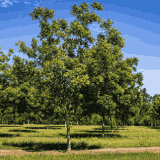
When viewed from a distance, the combined effect creates the airy canopy that makes mature pecan trees instantly recognizable.

How To Identify A Pecan Tree By Its Leaves
Leaf identification remains one of the easiest ways to recognize a pecan tree.
Several characteristics make pecan foliage distinctive:
- Long compound leaves
- 9 to 17 leaflets per leaf
- Alternate leaf arrangement
- Narrow, pointed leaflets
- Fine serrations along the edges
Leaves grow alternately along each pecan branch rather than directly opposite one another. This alternating pattern creates a slightly staggered appearance throughout the canopy.
Seasonal changes also help with identification. New leaves emerge bright green in spring before deepening in color during summer. In the fall, they transition to shades of yellow before dropping.
Young trees often produce somewhat larger leaves relative to their size, while mature trees develop dense canopies filled with hundreds of leaves.
Even so, the overall structure remains remarkably consistent throughout the tree's life.
Why Pecan Leaves Are Important
Leaves serve as the engine that powers every pecan tree.
Through photosynthesis, they convert sunlight into energy that supports root growth, canopy development, and nut production. Without healthy leaves, a tree simply cannot produce a strong crop.
The relationship between leaves and nuts becomes especially important during the summer. As pecans develop, the tree relies heavily on its foliage to generate the energy required to fill and mature each nut.
Healthy leaves contribute to:
- Strong tree growth
- Better nut quality
- Improved yields
- Greater drought resilience
Because leaves directly influence productivity, commercial growers monitor foliage closely throughout the growing season. A healthy canopy often signals a productive year ahead.
At Millican Pecan, generations of orchard experience have shown that exceptional pecans begin with healthy trees. Every thriving pecan orchard depends on strong foliage capable of supporting a successful harvest.

How Pecan Leaves Change Throughout The Seasons
Pecan trees change a lot across the seasons.
Spring Growth
Spring begins with bud break. As temperatures warm, buds swell and unfold into fresh new leaves. These young leaves appear soft, bright green, and highly active as photosynthesis begins ramping up.
Spring also marks the beginning of pollination season, making healthy leaf development particularly important.
Summer Development
By summer, pecan trees reach peak growth. The canopy becomes dense and full as leaves capture sunlight and fuel nut development. During this period, proper irrigation remains essential.
A healthy summer canopy should appear vibrant and evenly colored. Strong leaf production helps support the growing crop of nuts throughout the tree.
Fall Color Changes
As daylight decreases, leaves gradually shift from green to shades of yellow and gold. Photosynthesis slows, and the tree begins redirecting resources into preparation for dormancy. Eventually, leaves detach and fall to the ground.
This annual process helps conserve energy during the colder months.
Winter Dormancy
After leaves drop, pecan trees enter dormancy. Although the tree may appear inactive, important biological processes continue below ground. Roots remain active, storing resources needed for the following spring.
Bare branches reveal the structure of each pecan branch, making winter an ideal time for pruning and orchard maintenance.
Common Problems That Affect Pecan Leaves
Several issues can affect leaf health throughout the growing season.
Pecan Scab
Pecan scab represents one of the most significant diseases affecting pecan trees. The fungus causes dark lesions on leaves, shoots, and nuts. Severe infections can reduce photosynthesis and impact yields.

Aphid Damage
Aphids feed on leaf sap, weakening foliage and reducing vigor. Heavy infestations often lead to sticky honeydew deposits and reduced tree performance.
Nutrient Deficiencies
Deficiencies in zinc, nitrogen, or other nutrients frequently appear first in the leaves.
Symptoms may include:
- Yellowing
- Stunted growth
- Smaller leaflets
- Uneven coloration
Leaf Spot Diseases
Several fungal diseases cause spotting and discoloration. While minor infections rarely cause serious damage, severe outbreaks can weaken trees and reduce productivity.
Drought Stress
Insufficient water creates stress throughout the canopy. Leaves may curl, brown, or drop prematurely. Extended drought conditions can significantly impact both current and future nut production.
What Healthy Pecan Leaves Should Look Like
Healthy leaves provide valuable clues about overall tree health.
Look for:
- Uniform green coloration
- Full leaflet development
- Minimal spotting or discoloration
- Strong seasonal growth
A productive tree typically develops a dense, balanced canopy that captures abundant sunlight. Healthy foliage directly contributes to premium products such as fresh pecans, pecan halves, and bulk pecans.
Conclusion
The pecan leaf serves as one of the easiest ways to identify a pecan tree and one of the best indicators of overall tree health. Its distinctive compound structure, seasonal changes, and vibrant green color help distinguish pecans from other nut trees.
Monitoring leaf health allows growers and homeowners to spot problems early, support stronger growth, and protect future harvests.
At Millican Pecan, we've spent generations caring for trees from leaf emergence in spring to harvest in the fall. Healthy leaves help produce the exceptional Texas pecans, handcrafted pecan gifts, and orchard-fresh pecans that have made San Saba famous for more than a century.
Read more about pecans: