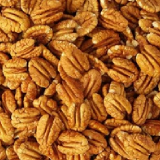




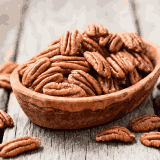


There are many various forms of pecans available. You would be surprised to know that there are over 1000 different varieties of pecans. Although all types of pecans have a somewhat nutty flavor and a wrinkled walnut-like appearance, they still vary in their characteristics. They have slightly different flavor, size, shape, color, texture, and oil content.
However, most pecans that are commercially available come from just a few varieties. The most popular pecan varieties in the United States are Desirable, Cape Fear, Stuart, and Moreland. Most of the varieties get their name from their discoverers or creator or are named after the places they were discovered in. Some varieties also get their names from the Native American tribes.
Desirable
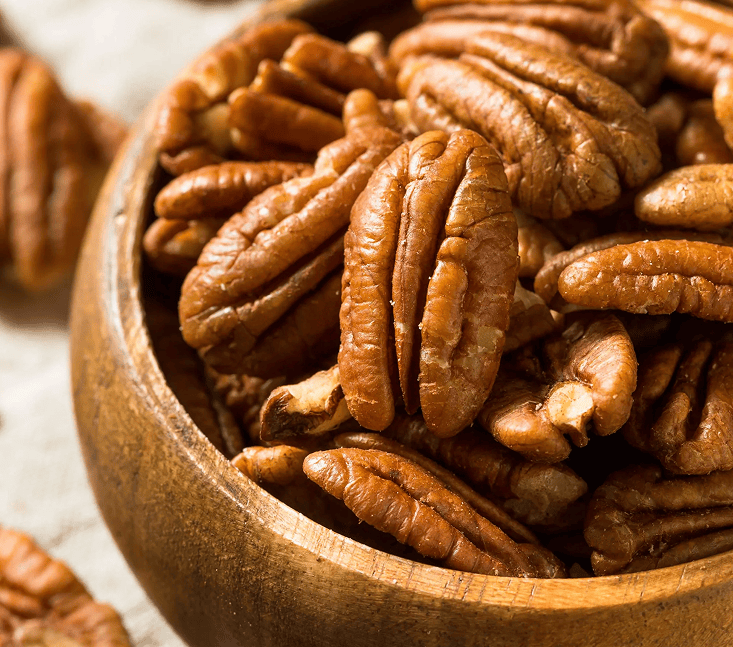


Desirable is among the top three selling types of pecans in the United States. It is considered a gold standard in comparison to other types of pecans. Desirable is susceptible to Pecan Scab and other diseases yet it is the most grown cultivar in the US due to its high yield, reliability and quality of nuts. The nuts are large, well-filled, and have an easy to crack the shell.
Cape Fear
Cape Fear pecans have a beautiful golden color and a better than average flavor. It is among the earliest pecan producing variety and often yields in its thirds season. Cape Fear pecans are also used more in the confection industries than the other varieties. The nut and the kernels are medium-sized. Cape Fear pecans have thinner shells than most of the varieties. The tree is resistant to Pecan Scab and other diseases.
Stuart
Stuart is widely cultivated by commercial growers all across the United States. It is an excellent and consistent producer, making it many farmers’ and pecan companies’ top choice. It is well resistant to Pecan Scab but susceptible to yellow and black aphids and other pecan diseases. The nuts are medium-sized and a bit smaller than the Desirable. The shell is harder and thicker than most other types of pecans. The trees require less maintenance than other varieties and have consistent nut yields.
Moreland
This type of pecan is well-known for its excellent yield of well-filled nuts. The shells of Moreland pecans have a medium thickness and well-formed kernel. The shell size is not too large, neither too small. Moreland Pecan Trees have outstanding resistance to cold, Pecan Scab, and other common diseases.
Elliot
Several pecan connoisseurs consider Elliot as the pecan variety with the best taste. The shell has a teardrop-like shape, is thicker, and a bit hard. The kernels of Elliot pecan are plumped. The oil content is higher than the average, which gives Elliot a rich buttery flavor. Elliot pecans are generally the most expensive type of pecans. Hence, you can only find them in gourmet grocery stores and specialty markets.
Kiowa
Kiowa pecans have a thinner, well-filled and attractive shell. The kernels have a darker color than other varieties. Kiowa pecan trees normally produce nuts in the fourth or fifth year, and so are popular among home growers. These trees prefer warm and humid climatic conditions for growth and are less resistant to cold.
Candy
The Candy originated in the Mississippi and was released in 1913. In the early days, Candy was commercially cultivated for use in the confection industry. With time as the new and flavorful varieties came, Candy pecans became less popular. Candy pecans are still grown in small farms and home of Louisiana, Florid and in some parts of Texas. These nuts have good flavor and paper-thin shells.