










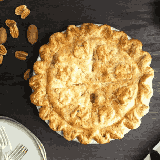


A runny or soupy pecan pie is one of the most common baking frustrations. Whether the center won’t set, the filling leaks out of the crust, or the bottom turns soggy, all these problems come from the same core issue: the custard-style filling did not fully bake or stabilize.
This guide combines expert advice to explain why pecan pies become runny and how to fix or prevent it every time.
Why Pecan Pies Turn Out Runny?
1. Underbaking the Filling
If your pecan pie is still a little soupy, it simply means you need to bake it more. The center or filling of a pecan pie needs time to thicken and set properly.
This pie is essentially a custard pie, which means a runny center is a result of underbaking. Most recipes suggest baking your pie for at least 60 to 70 minutes at 350°F, but depending on the oven, a pie can take more than 75 minutes.
Because pecan pie filling relies on eggs to set, even a small temperature variation can prevent the custard from firming up. If the center jiggles like liquid instead of wobbling like gelatin, it needs more time.


2. Incorrect Oven Temperature
If the oven was too cool, this could result in the filling and bottom crust failing to bake through.
Thermostats can differ from oven to oven. Age deterioration is common, and even seasoned bakers can get a watery pie despite using the same recipe for years.

An oven thermometer is one of the easiest ways to prevent runny pies caused by inaccurate temperature readings.
3. Removing the Pie Too Soon
Sometimes the crust begins to darken and you think, “If I don’t take it out now, the crust will burn.” But if the filling and bottom crust are not fully baked, it will result in a delicious-looking outer crust but a soupy pie.
If the edges brown too quickly, cover them with foil and continue baking until the center sets.
4. Using Dark Sugar or High-Moisture Ingredients
Dark sugar is wetter than white sugar, which can make your filling watery.
Brown sugar, maple syrup, and molasses all contain more moisture than corn syrup, which can delay setting time. Adjusting bake time is essential when using alternative sweeteners.
How to Fix a Runny and Soupy Pecan Pie?
Place it on the bottom rack of the oven and bake it for another 20 minutes, checking on it at the 10-minute mark.
If you are worried about the crust, cover it with aluminum foil and place it back into the oven for 15 to 20 minutes, until the filling is done.
Bake your pie a little longer by reducing your oven temperature to 325°F. You can prevent your crust from becoming too brown by covering it with foil.
\
If your pie is runny, bake it until a knife inserted in the center comes out clean.
If the pie is still warm, allow it to cool completely before judging the texture — pecan pie continues to set as it cools.
How to Prevent a Runny or Leaking Pecan Pie?
1. Pre-Bake or Strengthen the Crust
If you want to avoid a soggy crust altogether, consider pre-baking the crust before putting the pie filling in.
Your pie’s filling leaks because of cracks in the crust. If you have a par-baked crust with cracks or holes, brush the bottom with egg white and bake it for 5–8 minutes to create a barrier.
A strong crust prevents leaks and helps the filling set evenly, especially with high-moisture recipes.
2. Avoid Making Holes in the Crust
Don’t ever intentionally make holes in your crust to bake, as this method works for other pies, not pecan.
3. Reduce the Filling if Needed
If you are still struggling with leakage after trying both methods, reduce your filling. It may be making your crust soggy, leading to cracks.
4. Use Chocolate as a Barrier
Melt a chocolate bar and pour it on the center of your par-baked crust. Let it set in the refrigerator for 30 minutes before adding the filling.
This creates a moisture-proof layer and adds a subtle flavor boost.
5. Chill the Pie Before Baking
Most recipes call for the dough and some ingredients to remain chilled. Using a warm crust or warm ingredients could cause the butter to soften, contributing to a soggy crust.
Additional Tips for Perfect Pecan Pie Texture
Toasting the pecans helps intensify the nutty flavor while keeping them crisp.
Folding the pecans into the filling ensures nothing is poking out, preventing burning and helping the filling set.

Let the pie cool for at least 2–3 hours before slicing. Cutting too early is one of the most common reasons a pie appears runny even when fully baked.
FAQ
1. Why does my pecan pie stay jiggly in the center?
Because the custard has not fully set. A slight wobble is normal, but a liquid-like jiggle means it needs more baking time.
2. Can I fix a runny pecan pie after it cools?
Yes! Return it to a 325°F oven for 20–30 minutes with foil on the crust.
3. Why is my crust soggy?
Moisture from the filling seeped into the crust. Pre-baking or adding a barrier (egg wash or chocolate) prevents this.
4. Does brown sugar make pecan pie runnier?
Yes. Brown sugar contains more moisture than white sugar, which can delay setting.
5. How do I know when pecan pie is done?
The filling should bubble slightly, the top should be golden, and the center should wobble like gelatin — not slosh like liquid.
6. Why is my pecan pie runny?
Because the eggs didn’t set. This happens when:
- the pie was underbaked
- the oven temperature was inaccurate
- the filling contained too much moisture (brown sugar, maple syrup, molasses)
- the pie was cut before cooling completely
7. Why did my pecan pie not set?
The most common reason is underbaking. Even if the top looks done, the center may still be liquid. Pecan pies often need 70–75+ minutes depending on the oven. A pie that looks finished on the outside can still be raw inside.
8. Is pecan pie supposed to be runny?
No. A properly baked pecan pie should be firm, sliceable, and custard‑like, not liquid. A slight wobble is normal, but it should not be soupy.
Conclusion
A runny pecan pie is almost always caused by underbaking, incorrect temperature, or a weak crust. With proper baking time, a stable crust, and the right ingredients, you can consistently achieve a perfectly set, sliceable pecan pie every time.


