
















If you've ever bitten into a buttery, fresh pecan and wondered how it got from a tree to your kitchen table, you're not alone. Harvest season is one of our favorite times of year, and it's a lot more involved than just waiting for nuts to fall and scooping them up. Timing and the right equipment matter, and so does patience.
Whether you're a curious shopper or just love learning where your food comes from, understanding how to harvest pecans will give you a new appreciation for every bag you buy. We've spent generations perfecting this process on our San Saba, Texas farm, and we're happy to walk you through it.
What this article covers:
- Where Do Pecans Grow Best?
- When Are Pecans Harvested?
- How Pecans Are Harvested
- Harvesting Pecans FAQs


Where Do Pecans Grow Best?
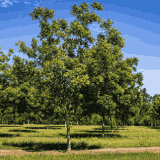
Pecans grow best in warm climates with deep, well-drained soil and plenty of room to spread out. Pecan trees are native to North America, and they thrive in a band of states stretching from the Southeast into the Southwest. The United States leads the world in pecan production, and 15 states grow pecans commercially, including Georgia, Texas, Florida and New Mexico.
Texas has a particularly strong claim to pecan history since the tree is the state's official state tree, and our orchards in San Saba sit in soil that's been growing pecans for well over a century.
A pecan tree needs sandy loam soil and consistent moisture, plus years of patience before it produces its first nuts, but once it does, it can keep bearing for a century or more.

When Are Pecans Harvested?
So, when are pecans harvested? When do pecans fall?
They're harvested in the fall, typically from October through December, though the exact window depends on the variety and the region. Depending on the variety and climate, harvesting pecan trees generally takes place from late September through November.
You'll know pecans are getting close when the green husks start to dry out and crack open along their seams. A mature pecan is ready to come down once its husk splits into sections and turns from green to brown.
Picking too early means an underdeveloped nut, while waiting too long can expose the crop to bad weather and hungry wildlife, not to mention mold. From our experience, watching the husks is the most reliable way to know when it's time to get started.
How Pecans Are Harvested
With the timing right, the real work begins. Here's how we take pecans from tree to bin, one step at a time:
Step 1: Watching and Waiting
Before any equipment gets fired up, we watch the trees closely. Once husks begin splitting and the first nuts start dropping on their own, it's a signal that the whole orchard is close behind. This stage takes a trained eye, since not every tree matures at the same rate, and even different branches on the same tree can ripen at slightly different times.
Step 2: Shaking the Trees
Once the crop is ready, mechanical tree shakers clamp onto the trunk and give it a firm, controlled shake. In just a few seconds, thousands of pecans rain down onto the orchard floor. It's loud and fast, and remarkably efficient compared to waiting on nature alone.
We've found that a quick, well-timed shake keeps the tree healthy while getting the maximum number of nuts to the ground.

Step 3: Sweeping and Collecting
With the nuts on the ground, sweepers move through the rows and gather them into tidy lines, clearing away leaves and sticks along the way. From there, a harvester rolls through and picks the pecans up off the ground, separating out much of the leftover debris as it goes.
Smaller operations sometimes rely on rakes or rolling hand tools instead, which works fine for a tree or two but gets tough fast at orchard scale.
Step 4: Cleaning and Drying
Fresh off the ground, pecans are still dirty and holding onto moisture, so they head to a cleaning facility where blowers and sorters strip away hulls, twigs, soil, and other debris.
Drying comes next, and it's one of the most important steps in the whole process. Nuts that go into storage too damp are prone to mold and rancid flavor, so we dry ours slowly and thoroughly before they move on.
Step 5: Storing for Later
Once dry, pecans get graded by size and quality, and then it's decision time: shell them now or keep them whole. In-shell pecans hold up longer in storage, while shelled nuts need a cooler spot, like the fridge or freezer, to stay fresh.
With years in the industry, we've learned that patience during drying and storage pays off in flavor down the line.

Harvesting Pecans FAQs
Why do pecan trees sometimes produce fewer nuts one year and more the next?
This is called alternate bearing, and it's a natural rhythm in pecan trees. A heavy crop one season often means the tree needs a year to recover before producing another big harvest.
Are pecans safe to eat right after they fall from the tree?
They're technically edible, but freshly fallen pecans still carry too much moisture for the best flavor and texture. Drying and curing first make a real difference in taste.
How can I tell if a pecan is good once I've cracked it?
A quality kernel looks plump and light golden brown, and it should snap cleanly rather than feel rubbery or bend without breaking. Shriveled or dark kernels usually mean the nut didn't mature properly or spent too long in storage.
Conclusion
Harvesting pecans is part science and part art, blending careful timing with the right equipment at the right moment. From watching the husks split to drying the final crop, every step affects the flavor you taste in the end. Next time you crack open a pecan, you'll know just how much work went into getting it there.
If you'd rather skip the shaking and sweeping and go straight to the eating, we invite you to shop our fresh Texas pecans and taste the difference a family farm makes.