


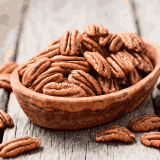
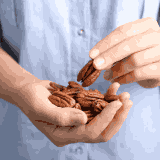


Pecans might all look alike in the shell, but crack a few open side by side and you'll notice they're anything but identical.
Some are small and oily. Others are big and buttery, with shells that snap open in your bare hands. There are more than a thousand types of pecans grown across the South and beyond, and picking a favorite can feel like a tall order for anyone new to the nut.
We've spent generations growing pecans on our family farm in San Saba, Texas, and we still get asked the same question every season: what sets one pecan variety apart from another? Below, we'll walk through some of the most popular types, starting with the Texas natives we know best.
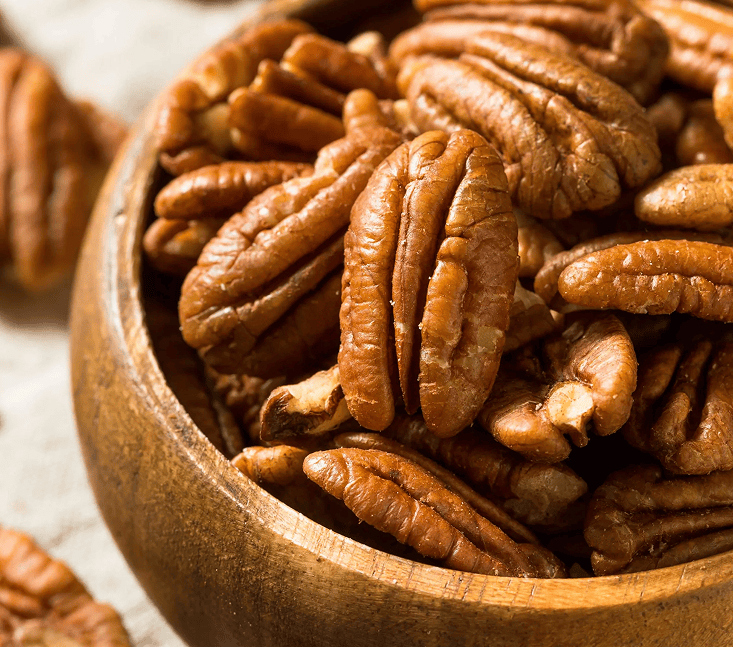


What Are the Different Types of Pecans?
Pecan varieties differ in shell thickness, kernel size, flavor, and even the climate they need to thrive. Here's a closer look at some of the most popular types on the market today:
1. Texas Pecans
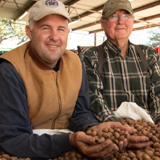
Texas pecans hold a special place in our orchard and in our hearts. But where do pecans come from? Our family has been harvesting pecans from our Mother Orchard in San Saba since 1888, and Texas remains one of the top pecan-producing states in the country.
Texas pecans include both native varieties, which tend to have thicker shells and smaller kernels, and improved cultivars bred for larger nuts and easier cracking.
From our experience, Texas-grown pecans develop a deep, rich flavor because the trees face real heat and drought stress during the growing season, and that hardship translates into a bolder taste on the tongue. If you want a pecan with genuine grit behind it, Texas pecans are the place to start.

2. Pawnee
Pawnee pecans ripen earlier than almost any other variety, which means they hit store shelves before the rest of the season's crop comes in. They're large and sweet, with a rich, buttery flavor that bakers love.
Pawnee trees stay relatively small, often maxing out around 30 feet, so home growers appreciate them for that reason, too. The catch is that Pawnee trees are scab-susceptible, so they need wide spacing and good airflow to keep their leaves dry and healthy.
3. Cheyenne
Cheyenne pecans came out of the USDA's breeding program in 1970, bred for early bearing in western growing regions. The nut is medium-sized with a thin shell, shelling out in bright, wrinkled halves with a light golden color and excellent flavor.
Cheyenne trees bear fruit young and produce heavy crops once established, though yields can swing from one year to the next, and the tree runs susceptible to aphids. Even so, Cheyenne remains a solid pick for growers who want nuts sooner rather than later.
4. Choctaw
Choctaw pecans came from a cross between Success and Mahan, and the result is one of the larger nuts on this list. The thin shell cracks easily, revealing a kernel that runs 58 to 62 percent of the nut's weight, with a rich, buttery flavor and a hint of sweetness.
Choctaw trees produce heavy, consistent crops and hold up well against disease, though they're heavy feeders that need deep, regular watering to fill out properly. For growers after size and flavor together, Choctaw delivers both.

5. Desirable
Desirable pecans are often held up as the gold standard among commercial growers, and by the 1990s, this variety had become the most widely planted pecan tree in the country. The nuts are large and well-filled, with a soft to medium shell that cracks easily and a full, rich flavor.
Desirable trees do carry a real weakness for pecan scab, which can cut into yields in a wet year, but growers keep planting them anyway because the quality is hard to beat.
6. Oconee
Oconee pecans bring a nice balance of sweet and savory notes, which makes them a favorite for salads with fruit and cheese. Think a Waldorf salad or a classic pairing of blue cheese and pear.
They also hold their own in a chicken salad alongside crisp apples and celery. Oconee trees are strong producers, and the nuts' balanced flavor profile makes them more versatile at the table than some of the wider, sweeter varieties on this list.
7. Schley
Schley pecans carry a high oil content and a thin shell that cracks with little effort, and the flavor that results is rich and satisfying. The nut runs medium to large and grows predominantly in Southwest arid climates. It is the most commercially planted variety from Texas to California. Because of the oil content, Schley pecans are widely used in oils, confections, baked goods, and gourmet snack mixes.
8. Stuart
Stuart is the most widely planted pecan variety in the southeastern United States, and there's a good reason for that. The tree is sturdy and low-maintenance, making it a reliable producer year after year. The nut itself has a brown-striped shell and a plump, pale-yellow kernel, with a sweet, crunchy bite to match.
The tradeoff is patience. Stuart trees typically take eight to 10 years before they bear their first nuts, which is longer than most other cultivars.

9. Elliot
Several pecan connoisseurs rank Elliot as the best-tasting variety on the market, and after putting it to the test ourselves, we understand why. The kernel is plump, and the oil content runs higher than average. That combination gives Elliot a rich, buttery flavor that other varieties don't quite match.
The shell has a distinctive teardrop shape and a bit of thickness to it. Elliot trees also resist disease well, which helps explain why this variety often shows up in gourmet shops and specialty markets rather than bargain bins.
10. Kiowa
Kiowa pecans stand out for their thin, attractive shell and a kernel that runs darker in color than most other cultivars. Trees usually start producing nuts in their fourth or fifth year, which is fast compared to varieties like Stuart, so home growers tend to gravitate toward Kiowa for that reason. The tree does best in warm, humid conditions and doesn't hold up well against cold snaps.
11. Candy
Candy pecans trace back to Mississippi around 1913, when they were bred specifically for confections such as pralines and divinity, along with pecan log rolls. The nuts are smaller and oval-shaped with a smooth kernel and a paper-thin shell that's easy to snap open by hand.
They're a touch sweeter than most other varieties, too, which makes sense given their name and original purpose. Fewer farms grow Candy pecans today, but you'll still find them on smaller Southern operations.

12. Cape Fear
The Cape Fear pecan got its start at North Carolina State University's Coastal Plain Research Station in the late 1930s, making it one of the earliest varieties still grown today. It's a medium-sized, oblong nut with a thin, easy-to-crack shell and a light golden kernel.
Because Cape Fear trees have low tolerance for cold, they thrive mostly in Texas and parts of Mexico. The flavor is above average and buttery, which is why confectioners lean on this variety for candy making. The tree also carries strong resistance to pecan scab, a fungal disease that can wreck a harvest.
13. Sioux
Sioux pecans are smaller than many of their counterparts, but don't let the size fool you. A Texas A&M horticulturist has called Sioux one of the best-tasting cultivars available today, and it's commonly grown across Texas even though it can be tough to track down by name.
Its size makes it a natural fit for mixed nut blends, where a larger pecan might otherwise overpower everything else in the bag.
Pecan Types FAQs
How should I store pecans to keep them fresh?
Pecans have a high oil content, so they can go rancid faster than many other nuts if left out at room temperature. Storing them in an airtight container in the refrigerator keeps them fresh for several months, and the freezer will stretch that out to a year or more.
To find out more, read how long can pecans be stored.
How can I tell if a pecan has gone bad?
Wondering, can pecans expire? Unfortunately, yes.
A fresh pecan should smell mild and slightly sweet. If it smells sour, bitter, or "off," or the kernel looks shriveled or discolored, it's best to toss it. A quick taste test works too. Rancid pecans have a sharp, unpleasant bite that's hard to miss.
Are pecans good for you?
Pecans are packed with healthy monounsaturated fats, fiber, and antioxidants, and they contain no cholesterol. A small handful makes a satisfying snack that can support heart health as part of a balanced diet.

Conclusion
With years in the industry behind us, we can say with confidence that there's no wrong way to fall in love with pecans. Every variety has something to offer, but for our money, nothing beats a Texas pecan.
Our family has been growing them in San Saba since 1888, and we've never found a reason to look anywhere else. If you're ready to taste the difference for yourself, we'd love for you to start with us.